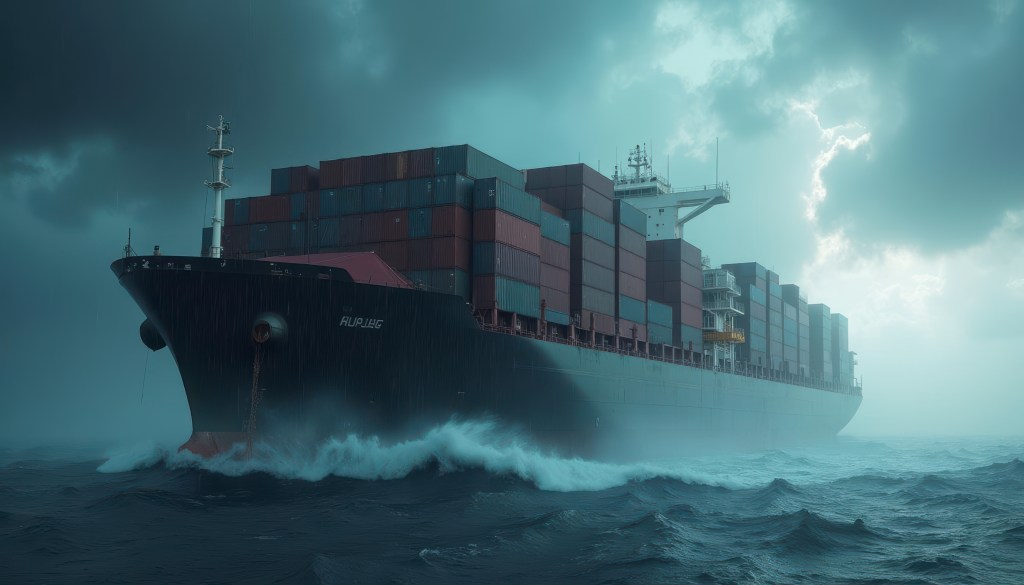
The recent instability in the global economy has shown businesses the need to build resilience into their supply chains for optimal and reliable operations. Navigating the contemporary challenges of geopolitical tensions, trade wars, climate change, market fluctuations, natural disasters, and the changing regulatory environment is necessary for business survival and profitability. Supply disruptions following the coronavirus pandemic outbreak and the recent conflicts in regions such as the Middle East (Isreal-Hezbollah), Central Africa (Congo-M23 rebels), Eastern Europe (Russia-Ukraine), North East Africa (Sudan-Para Military Forces) have further disrupted supply chains and highlighted the need for resilience. Additionally, the changing trade policy of global powers like the United States and the European Union is causing a realignment of international trade with some countries seeking alternative markets to minimize the effects of tariff increases and sanctions. In these present realities, Barroso et al (2015) noted that supply chains are facing multiple and constantly evolving risks which are derived from both internal and external sources.
DEFINITION OF SUPPLY CHAIN RESILIENCE
The concept of supply chain resilience is relatively new and is considered a part of supply chain risk management. There are several definitions of supply chain resilience as presented in the following:
The ability to proactively plan and design the supply chain network for anticipating unexpected events and respond adaptively to disruptions while maintaining control over structure and function (Ponis & Koronis, 2012).
The adaptive capability of the supply chain to prepare for unexpected events, respond to disruptions, and recover from them by maintaining continuity of operations at the desired level of connectedness and control over structure and function (Ponomarov & Holcomb, 2009).
The ability of a supply chain to anticipate, adapt, and recover from disruptions such as natural disasters, pandemics, and other unexpected events (Krantz et al, 2024).
From these definitions, the fundamental concept behind supply chain resilience can be described as the ability of a supply chain to mitigate undesired events, adapt to disruptions, and return to normal operational performance within the shortest possible time.
THE PILLARS OF SUPPLY CHAIN RESILIENCE
Resilient supply chains are underpinned by four key principles. These include
Flexibility: The ability to quickly adjust supply chain operations to adapt to unexpected events or disruptions.
Contingency: The ability to maintain strategic buffer inventory along the supply chain can ensure continuous operations during disruptions.
Visibility: The ability to anticipate and identify potential sources of supply and operational disruption is essential for avoiding or mitigating risk.
Collaboration: Strong relationships between supply chain members are crucial for effective supply chain management to ensure a seamless flow of materials and information.
BUILDING A RESILIENT SUPPLY CHAIN FOR SUSTAINED PERFORMANCE
Building resilient supply chains is essential for business survival and competitive advantage in an unstable environment. Companies can adopt a combination of proactive planning, operational flexibility, and the use of modern technologies to achieve desired performance levels.
Here are some strategies African businesses can use to build resilient supply chains in a globally uncertain business environment.
- Demand Forecasting and Planning
“If you fail to plan, you plan to fail” – Benjamin Franklin.
This simple but powerful phrase probably sums up this strategy perfectly. There has to be a plan that guides your operations. This is exactly why effective demand forecasting and planning is important and plays a central role in the development of resilient supply chains. Effective demand forecasting is heavily reliant on reliable data such as historical records, results of market analysis, and a better appreciation of both the micro and macroeconomic environment. The risk of uncertainty and disruption is significantly reduced by aligning your supply chain operations with the fluctuating demands of a volatile and uncertain environment, positioning your operations to effectively notice and deal with any potential deviations.
Data-backed artificial intelligence systems make the collection of reliable data easier and enhance the accuracy of demand forecasting and planning. This reduces the risk of overstocking and understocking, enabling businesses to quickly adapt to market changes, optimize inventory, and reduce revenue loss.
Case Study
Consumer goods company, Unilever has a diverse portfolio of consumer products including food, personal, and home care products. The company relies on a complex supply chain network to serve its millions of consumers across the world. Customer connectivity is a priority for the company and sits at the heart of its operations. To ensure supply chain agility and adaptability, the company rolled out a demand planning and forecasting strategy which is based on an AI-powered customer connectivity model for collaborative planning, forecasting, and replenishment. The system integrates forecast and actual sales data by removing barriers and increasing real-time data visibility for demand planning. This has improved forecasting accuracy, making their supply chain efficient and strengthing resilience in a volatile market.
Source: (Unilever, 2024)
- Inventory Management
Inventory management is the process of overseeing a company’s raw materials, work in progress, components, and finished products including the systems and processes for ordering, storing, using, and selling these products. Lean inventory practices have been used in several supply chains to reduce costs but there is now the need to balance its benefits with the reliability of holding strategic buffer inventory at key points along the supply chain. This helps to ensure operational continuity during periods of supply disruption. Additionally, maintaining an effective reorder level provides the company with a minimum inventory level to help mitigate the undesired effects of supply disruptions while providing room for alternative measures to be taken to restore supplies. Vendor Managed Inventory (VMI) is another inventory management strategy that can promote resilience by allowing suppliers to replenish inventories based on real-time demand, reducing stock-out occurrences and enhancing operational efficiency.
Case Study
Africa’s largest cement producer, Dangote Cement with operations in 10 countries including Nigeria, Ghana, Ethiopia, and Tanzania relies on an extensive supply chain network to produce and distribute cement across the continent. Efficient inventory management has been central to maintaining supply chain resilience and cost efficiency. To overcome the challenges of fluctuating demand, raw material shortages, foreign exchange volatilities, and logistics inefficiencies, the company adopted inventory management strategies such as automated inventory control based on ERP systems, strategic warehousing, distribution hubs, and backward integration for critical raw materials like limestone to improve control over supply chain operations and ensure resilience.
Source: (Dangote Cement, 2024)
- Supplier Relationship Management
Supplier relationship management forms a crucial aspect of supply chain resilience. It is now a widely accepted understanding in the supply chain community that, collaboration results in more tangible and long-term benefits compared to competitive and transactional relationships. To build resilient supply chains, visibility is necessary but difficult to achieve without strong relationships among the supply chain partners and stakeholders. Strong relationships facilitate effective information sharing, and risk management and provides support in challenging times. This type of collaborative relationship enables partners to work closely through open communication and helps in identifying potential sources of disruption. In many instances, supply chain partners have expertise in specialized areas that can be leveraged for improved visibility and understanding of risk sources so mitigating measures can be put in place to ensure resilience through effective coordination. The proactive nature of strong relationships encourages innovation for improved agility and adaptability.
Case Study
South African retail giant, Shoprite Holdings, recognizes that strong relationships with their suppliers are essential for their success. For this, they have developed long-standing relationships with primarily local suppliers within the countries they operate. This approach has enabled the retailer to support the overall development of local suppliers and promote availability per country. The company builds on supplier relationships by engaging its suppliers to promote transparency, and accountability and work with them to improve their overall social and environmental impacts. Their annual supplier awards recognize the valuable contributions of suppliers to the success of the Group. Ultimately, these combined efforts ensure that the Group’s supply chain remains agile and resilient.
Source: (Shoprite Group, 2023)
- Supplier Diversity and Development
Supplier diversity and development are essential strategies for strengthening supply chain resilience by improving flexibility, reducing risk, and promoting innovation. Diversifying supply sources reduces the reliance on a single source, mitigating the disruptions caused by geopolitical tensions, natural disasters, and economic instability. Supplier diversity provides flexibility that supports businesses to quickly adapt to changes in their environment. A diverse supplier network provides alternative sourcing options during a crisis and helps return operations to desired levels swiftly.
Supplier development supports the development of reliable supply chains by enhancing the availability of consistent quality and reliability to meet the changing demands in an uncertain environment. By investing in the development of local businesses, companies can reduce lead times and enhance responsiveness to market changes. This not only creates an agile and efficient supply chain network but contributes to economic growth and promotes an inclusive supply chain ecosystem.
Case Study
MTN Group recognizes that its success is intertwined with the success of local businesses and people in the markets within which they operate. To meet the company’s strategic priority for creating shared value, MTN launched the Xlerator enterprise and supplier development programme in September 2023 which aims to transform the company’s supply chain by creating a platform for the growth of Black-owned suppliers through financial support, development support, and training. The skills development is aimed at meeting the growing demand for critical and specialized skills in the ICT sector and the economy at large. This forms part of their responsibility to foster inclusive and sustainable economic growth. Through this, their supply chain has been transformed by providing opportunities for local businesses.
Source: (MTN Group, 2024)
- Investment in Digital Technology
Digitalization is the new normal in driving efficiency and excellence in supply chains. It improves decision-making by enhancing visibility and streamlining operations. Digital technologies enhance organizational flexibility in adapting to the changing demands of an uncertain environment. It helps to detect potential sources of disruption and increase efficiency in supply chain operations. Technologies like Artificial Intelligence (AI) and Natural Language Processing (NLP) improve productivity by analyzing complex data and predicting potential sources of risk. Data analytics provides useful insights into large volumes of unstructured data, helping businesses make informed proactive decisions to increase efficiency. Cloud-based technologies and blockchain strengthen traceability to help mitigate supply chain disruptions based on reliable and easily accessible data. Integrating the Internet of Things into supply chain operations can help monitor activities and gather large volumes of data to predict potential disruptions well in advance. Collectively, digital technologies help significantly in the development of resilient supply chains and reduce uncertainty.
Case Study
Kenyan agri-tech company, Twiga Foods uses a digital technology-driven supply chain model to connect small-scale farmers with retailers. The company supplies fresh produce directly from farmers to urban retailers across Kenya, eliminating the challenges associated with a fragmented supply chain including price volatility, limited transparency, cash-based transactions, and post-harvest losses. Twiga Foods’ digital technology solutions create a seamless and data-driven supply chain in the Agriculture sector. The platform includes AI-powered demand forecasting, mobile-based ordering, IoT-enabled cold chain logistics, data-driven route optimization, and blockchain technology for improved transparency.
Source: (Food Business Africa, 2022)
PERFORMANCE METRICS FOR SUPPLY CHAIN RESILIENCE
Companies can measure the effectiveness of their supply chain resilience using the following performance metrics.
Time to survive
This metric tracks the period a company can operate without significant operational and financial setbacks during supply chain disruptions. It includes the ability of a supply chain to endure delays and shortages while maintaining business continuity.
Time to recover
This metric measures the period a business takes to return to normal operational performance following a disruption. The faster a company can recover, the lesser the impact of the disruption on overall performance.
Time to thrive
This metric measures the duration it takes a company’s supply chain to recover from disruptions and capitalize on the opportunities thereafter. This includes the ability to adapt quickly, innovate, and reorganize processes following a disruption.
CHALLENGES IN BUILDING RESILIENT SUPPLY CHAINS
Lack of visibility: Limited end-to-end supply chain visibility hinders the ability of businesses to identify potential sources of disruptions and address them quickly. Real-time data and insights into supply chain operations are important to ensure proactive decision-making.
Globalisation and Specialisation of Production: Globalisation has facilitated the specialisation and concentration of production within certain regions making the ability to switch to other supply sources restricted for some products. It may be difficult to find other reliable and cost-efficient sources.
Resource Limitations: There are some cost implications in building resilience in supply chains. These include investment in digital technologies and the costs associated with holding strategic buffer stocks.
Inadequate Infrastructure: The infrastructure required to implement digital technologies such as artificial intelligence, blockchain, machine learning, and IoT at scale is lacking in many businesses.
CONCLUSION
Supply chain resilience is a modern business imperative. The cost of being reactive is very high and unpleasant, therefore, African businesses must be proactive in building resilience into their supply chain operations to withstand the challenges of an uncertain environment. Through effective demand forecasting and planning, effective inventory management, improved supplier relationships, supplier diversity, and investments in digital technologies, companies can strengthen their supply chains and ensure their long-term success in a dynamic global environment.
Is your business prepared?
Featured image source: vecteezy.com
References
Barroso, A. P., Machado, V. H., Carvalho, H., & Machado, V. C. (2015). Quantifying the Supply Chain Resilience. In H. Tozan, & A. Erturk, Applications of Contemporary Management Approaches in Supply Chains. IntechOpen.
Ponomarov, S., & Holcomb, M. (2009). Understanding the concept of supply chain resilience. Internation Journal of Logistics Management, 124-143.
Ponis, S., & Koronis, E. (2012). Supply Chain Resilience: Definition Of Concept And Its Formative Elements. Journal of Applied Business Research.
Krantz, T., Jonker, A., & Diaz, S. (2024, November 25). What is supply chain resilience? From IBM: https://www.ibm.com/think/topics/supply-chain-resiliency
Shoprite Group. (2023, July 2). Sustainability Report. From Shoprite Holdings Limited: https://www.shopriteholdings.co.za/docs/shp-sr-2023.pdf#page=37
Dangote Cement. (2024, March 1). Annual Report and Accounts 2023. From Dangote Cement Plc: https://www.dangotecement.com/wp-content/uploads/2024/04/DCP-Annual-Report_AR23_full.pdf
Unilever. (2024, July 31). Utilising AI to redefine the future of customer connectivity. From Unilever: https://www.unilever.com/news/news-search/2024/utilising-ai-to-redefine-the-future-of-customer-connectivity/
MTN Group. (2024, April 23). Unlocking inclusive growth, MTN retains Level 1 B-BBEE contributor status. From MTN: https://www.mtn.com/unlocking-inclusive-growth-mtn-retains-level-1-b-bbee-contributor-status/
Food Business Africa. (2022, October 14). Twiga Foods leverages Google Cloud solutions to streamline food supply chain operations. From Food Business Africa: https://www.foodbusinessafrica.com/twiga-foods-leverages-google-cloud-solutions-to-streamline-food-supply-chain-operations/


Leave a comment