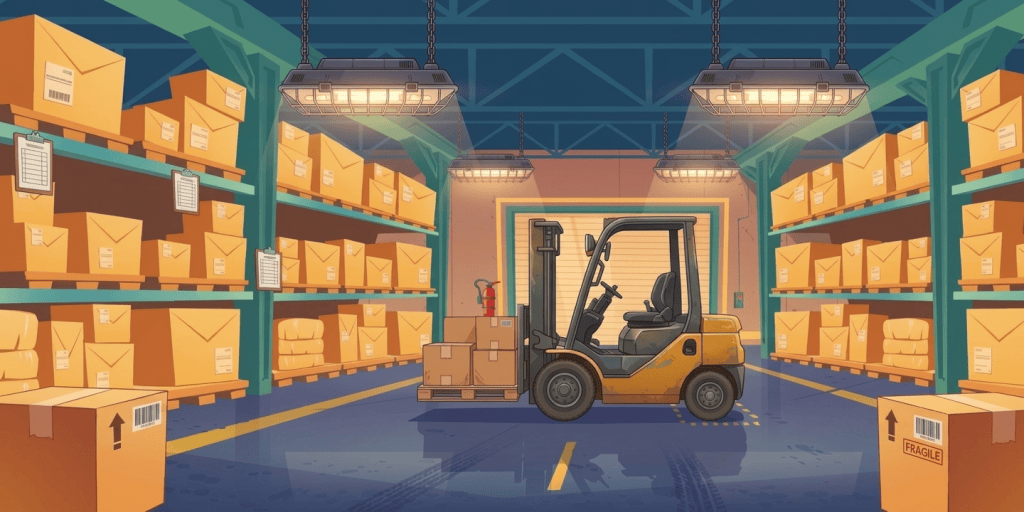
How inventory decisions can free up cash, protect margins and support business growth.
Your warehouse may be holding more than stock
Imagine a business owner who has just completed a strong sales month. Orders are coming in, customers are buying, and the warehouse is full. Yet, when suppliers request payment and salaries fall due, cash is tight. The owner assumes the business needs more sales or a bigger overdraft. But the real problem may be sitting on the warehouse shelves. Some products were purchased too early. Others were bought in quantities that exceed demand. Certain items have barely moved in months, while the products customers actually want are running out. The business has money. It simply cannot access enough of it.
This is one of the hidden costs of poor inventory management: cash tied up in stock that is not generating value quickly enough.
Inventory is an asset but it comes at a cost
Inventory is necessary. Manufacturers need raw materials, retailers need products to sell, and distributors must maintain stock to serve customers but holding inventory consumes cash before it generates a return.
Consider a business that spends GHS100,000 on inventory. If a significant portion remains unsold for months, that money cannot easily be used to settle supplier invoices, fund marketing, purchase faster-moving products or respond to an unexpected opportunity.
The stock may appear as an asset in the accounts, but it is not the same as cash in the bank, and the cost does not stop at the original purchase price. Excess stock may also incur storage, handling, insurance, damage, deterioration and obsolescence costs. For food manufacturers and businesses dealing in perishable products, the consequences can be particularly severe.
The question is not whether a business should hold inventory. It is whether the inventory it holds is justified by demand, risk and the cost of keeping it.
Four ways warehouses quietly trap cash
1. Buying more than demand requires
Bulk purchasing can unlock discounts, but a lower unit price does not automatically mean a better commercial decision.
A business that buys 1,000 units to obtain a discount may end up holding stock for months. The savings on price can be outweighed by storage costs, slow sales and the opportunity cost of cash tied up in unsold products.
Before committing to a large order, compare the discount with the additional cost of holding the stock and the likely time needed to sell or consume it. The objective is not to buy the cheapest. It is to buy economically.
2. Keeping slow-moving stock for too long
Many businesses track what they purchase and what they sell, but pay less attention to how long individual products remain in storage. Slow-moving inventory can quietly accumulate until it becomes difficult to sell, use or recover its original cost.
A simple monthly review can help identify products that have not moved within an expected period, items with declining demand and stock approaching expiry or obsolescence. Once identified, the business can decide whether to reduce future orders, promote the stock, negotiate a return or adjust its purchasing policy. The earlier the problem is identified, the more options the business has.
3. Poor demand planning
When purchasing decisions are based mainly on intuition, outdated sales figures or fear of running out, businesses often swing between two extremes: excess stock and stockouts. Both can damage cash flow.
Excess stock locks up money. Stockouts can mean lost sales, emergency purchases and dissatisfied customers.
Better demand planning helps businesses align purchasing with expected sales, seasonal patterns, customer commitments and supplier lead times. Forecasts will never be perfect, but they can help decision-makers make more informed purchasing choices.
4. Failing to connect warehouse decisions to cash flow
Inventory decisions are often treated as operational matters, separate from financial performance. But the connection is direct.
When stock sits longer than necessary, cash remains tied up for longer. When stock moves efficiently, the business has a better opportunity to recover its investment and reinvest the proceeds. This is why warehouse performance should not be judged only by storage capacity, stock accuracy or order fulfilment. It should also be evaluated by how effectively inventory supports the business’s working-capital needs.
Five practical actions SMEs can take
Improving inventory-related cash flow does not necessarily require expensive warehouse software or sophisticated analytics. Start with better discipline.
1. Identify your slow-moving stock. Review inventory movement monthly and establish clear rules for investigating items that remain unsold or unused beyond expected periods.
2. Review purchasing quantities. Before placing large orders, consider demand, supplier lead times, storage costs, shelf life and the cash required to fund the purchase.
3. Prioritise the inventory that matters most. Focus closer attention on items with high financial value, critical production importance, long replenishment times or significant stockout consequences.
4. Track a few meaningful metrics. Start with inventory turnover, days inventory outstanding, stockout frequency and the value of slow-moving or obsolete stock. Use the results to guide purchasing and replenishment decisions.
5. Make inventory a shared responsibility. Procurement, warehouse, sales, operations and finance teams should discuss demand, stock levels, upcoming purchases and cash constraints together. No department should optimise its own targets at the expense of the business as a whole.
The bigger lesson: growth requires cash discipline
A growing business needs inventory, but it also needs liquidity. The challenge is to maintain enough stock to serve customers and protect operations without committing more cash than necessary. This requires a shift in perspective. Instead of only asking, “Do we have enough stock?”, business leaders should also ask:
- How much cash is currently tied up in inventory?
- Which products are taking too long to move?
- Are our purchasing quantities aligned with actual demand?
- What could we do with the cash released from excess stock?
- Are we measuring inventory performance in a way that supports profitability?
These questions turn inventory management from a routine warehouse activity into a strategic business decision.
Final thought
A full warehouse can create a reassuring picture of business strength. But stock that does not move can quietly weaken the business behind that picture. The aim is not to empty the warehouse or minimise inventory at all costs. It is to hold the right stock, in the right quantities, for the right reasons and to understand the cash consequences of every decision because inventory should support your business, not silently finance inefficiency.
Put the insight into practice
AfriChain Insights Consulting helps SMEs identify supply chain inefficiencies that affect working capital, operational performance and business resilience. Use our Cash Flow Diagnostic Tool to assess where operational decisions may be trapping cash in your business.
About the Author
Daniel Ghartey-Mould, PMP, MCIPS is the Founder and Lead Consultant at AfriChain Insights Consulting. He helps African SMEs build resilient, efficient and future-ready supply chains, with a focus on procurement transformation, inventory management, supply chain resilience and operational excellence.


Leave a Reply